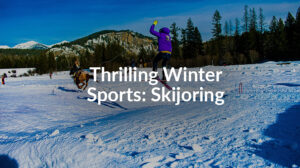
Though it originated centuries ago in Scandinavia as a practical way to travel across snow-covered terrain, skijoring has evolved into one of the most electrifying and visually striking winter sports in the world. Fast, loud, and adrenaline-packed, it blends skiing with horsepower in a way that feels equal parts extreme sport and winter spectacle.
Despite its long history, skijoring remains relatively unknown to many outdoor and sports enthusiasts—making it an exciting discovery for anyone looking to explore something beyond traditional winter activities.
What Is Skijoring?
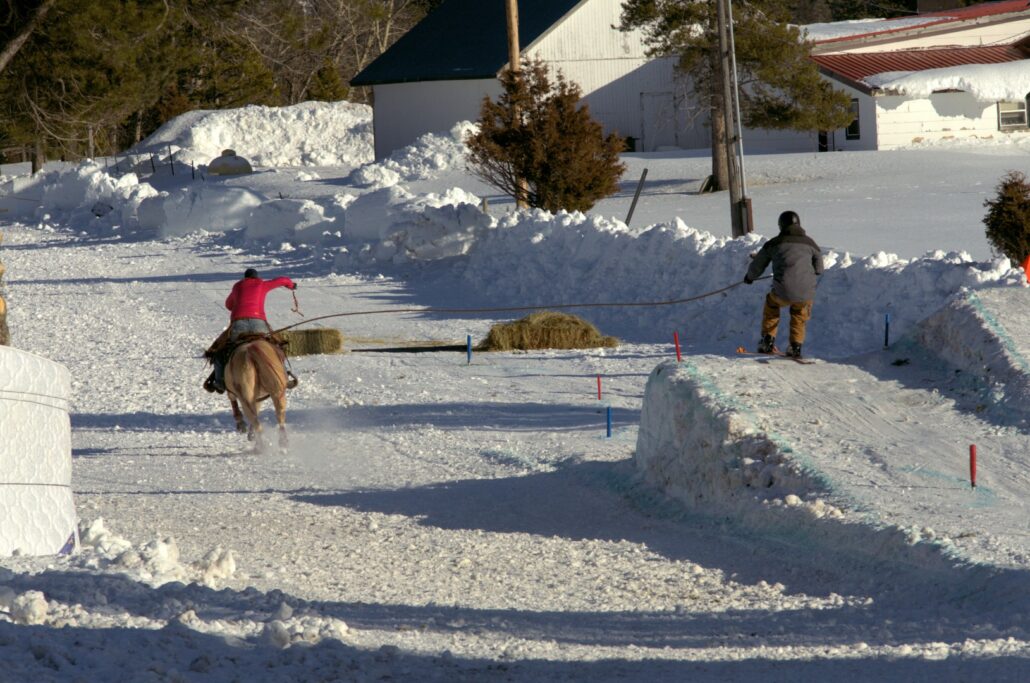
Skijoring is a sport in which a skier is pulled at high speed through a snow-packed course by a horse, snowmobile, or ATV. Competitive courses typically include long straightaways, sharp turns, jumps, and technical features designed to test balance, speed, and coordination.
In equestrian skijoring, a rider guides the horse while the skier follows behind, often required to grab hanging rings along the course to avoid time penalties. Victory isn’t just about raw speed—it demands precision, timing, and seamless teamwork.
Simply put: the fastest team to complete the course while meeting all course requirements wins.
The result is a sport that feels chaotic and graceful at the same time, with roaring engines or pounding hooves paired with flying snow and split-second decisions.
Why Skijoring Is So Captivating
Skijoring stands out because it defies expectations. It’s not quite skiing, not quite motorsports, and not quite equestrian competition—but somehow all three at once. Spectators are often hooked instantly by the speed, unpredictability, and sheer novelty of watching skiers launch off jumps while being pulled by animals or machines.
It’s also incredibly dynamic: no two runs are ever exactly the same. Weather conditions, snow texture, timing, and communication between skier and driver all play a role in each outcome.
Competitive Skijoring Today
Modern skijoring competitions are sanctioned by organizations like the North American Ski Joring Association (NASJA) and take place across snowy regions of North America and Europe. Events range from small local races to large-scale festivals held in town centers, racetracks, and winter resorts.
These competitions often draw thousands of spectators, combining racing with live music, food vendors, and winter celebrations—making skijoring as much a cultural event as a sporting one.
Why People Fall in Love With It
At its core, skijoring is about teamwork, trust, and thrill. Participants often say the sense of community is just as powerful as the sport itself—welcoming, passionate, and deeply connected to winter culture and outdoor adventure.
For those seeking something fast, unusual, and unforgettable, skijoring offers a rare chance to experience winter in a way few people ever do.